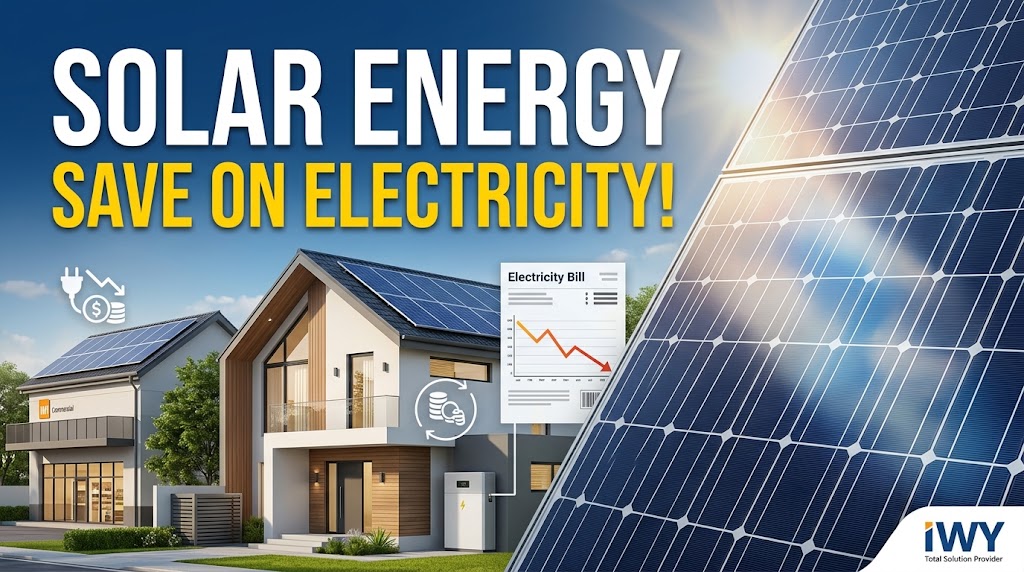
As electricity costs continue to rise, homeowners and businesses are looking for more efficient and sustainable ways to manage their energy consumption. Solar energy is one of the most practical renewable energy solutions available today.
A solar power system uses solar panels to convert sunlight into electricity that can be used to power homes, offices, commercial buildings, warehouses, and other facilities. With the right system design, solar energy can help reduce dependence on grid electricity, manage energy costs, and support a more sustainable future.
But how do solar panels work, and is solar power suitable for your property?
What Is Solar Energy?
Solar energy is renewable energy obtained from sunlight. Solar panels, also called photovoltaic (PV) panels, convert sunlight into electrical energy.
The electricity generated by a solar panel system can be used to operate everyday electrical equipment, including:
- Lights and appliances
- Computers and office equipment
- Air-conditioning systems
- CCTV surveillance systems
- Network and IT equipment
- Access control systems
- Industrial and commercial equipment
Depending on the system configuration, excess electricity can be stored in a solar battery or, where applicable, exported to the electrical grid.
👉 --> Available CCTV Products & More - click link
How Do Solar Panels Work?
A basic solar power system works by converting sunlight into usable electricity.
Solar Panels → Inverter → Electrical Loads
Solar panels capture sunlight and produce DC electricity. The solar inverter then converts the DC electricity into AC electricity that can be used by standard electrical equipment.
A system with battery storage may work like this:
Solar Panels → Inverter → Battery Storage → Electrical Loads
The battery can store available solar energy for later use, depending on the system design and battery capacity.
The actual performance of a solar power system depends on factors such as sunlight, shading, panel orientation, system size, equipment efficiency, and the property's electricity consumption.
Why Are Solar Panels Important?
- Potentially Lower Electricity Costs
One of the main reasons homeowners and businesses consider solar panels is the potential to reduce their electricity expenses.
Solar panels generate electricity during daylight hours, allowing users to consume solar-generated power instead of relying entirely on electricity from the grid.
The amount of savings varies depending on electricity usage, system size, utility rates, sunlight conditions, and other factors.
For businesses that consume a significant amount of electricity during the day, solar power can be particularly useful because solar generation can occur while the facility is operating.
- Renewable Source of Energy
Sunlight is a renewable energy resource. Unlike conventional energy sources that require fuel to be continuously extracted and consumed, solar panels generate electricity from sunlight.
Using renewable energy can help households and businesses reduce their reliance on conventional electricity sources and become part of the transition toward cleaner energy.
- Helps Reduce Environmental Impact
Solar power generates electricity without directly burning fossil fuels during operation.
By incorporating renewable energy into a property's electricity supply, homeowners and businesses can reduce their reliance on electricity generated from conventional fuel sources.
Solar energy is therefore an important technology for supporting more sustainable energy use.
- Greater Energy Independence
A solar power system can provide another source of electricity for your property.
When solar panels are combined with battery storage, some of the generated energy can be stored and used later when solar production is lower, such as in the evening.
This can give property owners greater flexibility in managing their energy consumption.
- A Practical Solution for Businesses
Electricity can represent a significant operating expense for businesses.
Commercial establishments such as offices, warehouses, retail stores, restaurants, and industrial facilities may have substantial electricity requirements.
A properly designed commercial solar power system can help businesses offset a portion of their electricity consumption while supporting long-term energy management and sustainability goals.
👉 --> Book your Free Site Visit Now - Click Link
Solar Panels vs. Solar Batteries: What's the Difference?
Solar panels and solar batteries have different functions.
Solar panels generate electricity.
Solar batteries store electricity.
For example, solar panels may generate electricity during the day. If the system includes battery storage, some of that energy can be stored and potentially used later.
A battery may be useful for customers who want additional energy storage or backup capability. However, not every solar installation requires batteries.
The appropriate system depends on the property's energy requirements and the customer's objectives.
Is Solar Power Only for Homes?
No. Solar energy can be used for residential, commercial, industrial, and other applications.
Homeowners can install solar panels to help manage household electricity consumption and potentially reduce their monthly electricity expenses.
Businesses can use solar power to offset part of their electricity requirements. Solar panels can be installed on suitable rooftops, structures, or other appropriate areas.
Facilities with higher electricity consumption may consider larger solar power systems designed around their energy demand and available installation space.
Solar for Remote Locations
Solar power can also be considered for locations where access to reliable grid electricity is limited. When combined with battery storage, it can provide a more independent energy solution.
Can Solar Panels Work During a Power Outage?
One common misconception about solar panels is that they automatically provide electricity whenever the power goes out.
This is not always the case.
Many standard grid-connected solar systems automatically shut down when the utility grid experiences an outage. This is an important safety feature.
If you want solar power to provide electricity during an outage, the system may require additional equipment such as:
Solar battery storage
Backup inverter
Automatic transfer equipment
Dedicated backup circuits
When planning a solar installation, it is important to determine whether your primary goal is electricity savings, backup power, or both.
What Should You Consider Before Installing Solar Panels?
Installing solar panels is more than simply placing panels on a rooftop. A properly designed solar power system should be based on the property's actual ener
gy requirements.
Important factors include:
Monthly electricity consumption
Electricity bills
Peak power demand
Available roof or installation area
Roof condition
Sunlight exposure
Shading from nearby structures
Panel orientation
Electrical system capacity
Solar panel capacity
Inverter capacity
Battery requirements
Future electricity needs
Installation requirements
Overall project budget
A professional solar site assessment can help identify the appropriate system configuration for the property.
Solar Energy in the Philippines
The Philippines receives significant sunlight throughout the year, making solar energy in the Philippines an increasingly relevant option for residential and commercial properties.
However, solar system performance can still vary depending on location, weather conditions, shading, roof orientation, installation design, and equipment.
This is why a site assessment and proper system sizing are important before purchasing or installing solar panels.
Rather than simply choosing the largest available system, the goal should be to select a solar power system that matches your actual energy consumption and requirements.
What Are the Benefits of a Properly Designed Solar Power System?
A properly designed solar installation can provide several potential benefits:
Better utilization of available sunlight
More efficient use of generated electricity
Appropriate system sizing
Better integration with existing electrical systems
Potential reduction in grid electricity consumption
Optional battery storage and backup capability
Better planning for future energy requirements
Professional planning also helps identify installation requirements before the project begins.
Solar Energy as a Long-Term Energy Solution
Solar energy is more than simply installing panels on a roof. It is a long-term approach to managing how a property generates and consumes electricity.
For homeowners, solar panels can be part of a more energy-efficient home.
For businesses, a solar power system can become part of a broader energy management strategy.
For commercial and industrial facilities, solar energy can help diversify the property's electricity sources while supporting sustainability initiatives.
As technology continues to develop, solar systems can also be combined with battery energy storage, energy monitoring, smart technologies, and other energy-efficient solutions.
Start with the Right Solar Solution
Every property has different electricity requirements. The right solar power system depends on how much energy you use, when you use it, the available installation area, and whether you need battery backup.
Before investing in solar panels, a proper site assessment and energy evaluation can help determine what type and size of system may be appropriate for your property.
Looking for Solar Panel Solutions?
IWY Total Solution Provider provides technology and security solutions for residential, commercial, and business requirements. Solar energy can complement solutions such as CCTV surveillance, networking, access control, and other technology systems.
If you're considering solar panels for your home, office, commercial establishment, or facility,you may contact IWY Total Solution Provider to discuss your requirements and arrange a site assessment.
☀️ Power Smarter. Save Energy. Build for the Future.
📩 Contact IWY Total Solution Provider for solar power inquiries and site assessment.
IWY Total Solution Provider
Your Technology Partner for Security, Connectivity & Smart Solutions








As electricity costs continue to rise, homeowners and businesses are looking for more efficient and sustainable ways to manage their energy consumption. Solar energy is one of the most practical renewable energy solutions available today.
A solar power system uses solar panels to convert sunlight into electricity that can be used to power homes, offices, commercial buildings, warehouses, and other facilities. With the right system design, solar energy can help reduce dependence on grid electricity, manage energy costs, and support a more sustainable future.
But how do solar panels work, and is solar power suitable for your property?
What Is Solar Energy?
Solar energy is renewable energy obtained from sunlight. Solar panels, also called photovoltaic (PV) panels, convert sunlight into electrical energy.
The electricity generated by a solar panel system can be used to operate everyday electrical equipment, including:
Depending on the system configuration, excess electricity can be stored in a solar battery or, where applicable, exported to the electrical grid.
👉 --> Available CCTV Products & More - click link
How Do Solar Panels Work?
A basic solar power system works by converting sunlight into usable electricity.
Solar Panels → Inverter → Electrical Loads
Solar panels capture sunlight and produce DC electricity. The solar inverter then converts the DC electricity into AC electricity that can be used by standard electrical equipment.
A system with battery storage may work like this:
Solar Panels → Inverter → Battery Storage → Electrical Loads
The battery can store available solar energy for later use, depending on the system design and battery capacity.
The actual performance of a solar power system depends on factors such as sunlight, shading, panel orientation, system size, equipment efficiency, and the property's electricity consumption.
Why Are Solar Panels Important?
One of the main reasons homeowners and businesses consider solar panels is the potential to reduce their electricity expenses.
Solar panels generate electricity during daylight hours, allowing users to consume solar-generated power instead of relying entirely on electricity from the grid.
The amount of savings varies depending on electricity usage, system size, utility rates, sunlight conditions, and other factors.
For businesses that consume a significant amount of electricity during the day, solar power can be particularly useful because solar generation can occur while the facility is operating.
Sunlight is a renewable energy resource. Unlike conventional energy sources that require fuel to be continuously extracted and consumed, solar panels generate electricity from sunlight.
Using renewable energy can help households and businesses reduce their reliance on conventional electricity sources and become part of the transition toward cleaner energy.
Solar power generates electricity without directly burning fossil fuels during operation.
By incorporating renewable energy into a property's electricity supply, homeowners and businesses can reduce their reliance on electricity generated from conventional fuel sources.
Solar energy is therefore an important technology for supporting more sustainable energy use.
A solar power system can provide another source of electricity for your property.
When solar panels are combined with battery storage, some of the generated energy can be stored and used later when solar production is lower, such as in the evening.
This can give property owners greater flexibility in managing their energy consumption.
Electricity can represent a significant operating expense for businesses.
Commercial establishments such as offices, warehouses, retail stores, restaurants, and industrial facilities may have substantial electricity requirements.
A properly designed commercial solar power system can help businesses offset a portion of their electricity consumption while supporting long-term energy management and sustainability goals.
👉 --> Book your Free Site Visit Now - Click Link
Solar Panels vs. Solar Batteries: What's the Difference?
Solar panels and solar batteries have different functions.
Solar panels generate electricity.
Solar batteries store electricity.
For example, solar panels may generate electricity during the day. If the system includes battery storage, some of that energy can be stored and potentially used later.
A battery may be useful for customers who want additional energy storage or backup capability. However, not every solar installation requires batteries.
The appropriate system depends on the property's energy requirements and the customer's objectives.
Is Solar Power Only for Homes?
No. Solar energy can be used for residential, commercial, industrial, and other applications.
Homeowners can install solar panels to help manage household electricity consumption and potentially reduce their monthly electricity expenses.
Businesses can use solar power to offset part of their electricity requirements. Solar panels can be installed on suitable rooftops, structures, or other appropriate areas.
Facilities with higher electricity consumption may consider larger solar power systems designed around their energy demand and available installation space.
Solar for Remote Locations
Solar power can also be considered for locations where access to reliable grid electricity is limited. When combined with battery storage, it can provide a more independent energy solution.
Can Solar Panels Work During a Power Outage?
One common misconception about solar panels is that they automatically provide electricity whenever the power goes out.
This is not always the case.
Many standard grid-connected solar systems automatically shut down when the utility grid experiences an outage. This is an important safety feature.
If you want solar power to provide electricity during an outage, the system may require additional equipment such as:
Solar battery storage
Backup inverter
Automatic transfer equipment
Dedicated backup circuits
When planning a solar installation, it is important to determine whether your primary goal is electricity savings, backup power, or both.
What Should You Consider Before Installing Solar Panels?
Installing solar panels is more than simply placing panels on a rooftop. A properly designed solar power system should be based on the property's actual ener
gy requirements.
Important factors include:
Monthly electricity consumption
Electricity bills
Peak power demand
Available roof or installation area
Roof condition
Sunlight exposure
Shading from nearby structures
Panel orientation
Electrical system capacity
Solar panel capacity
Inverter capacity
Battery requirements
Future electricity needs
Installation requirements
Overall project budget
A professional solar site assessment can help identify the appropriate system configuration for the property.
Solar Energy in the Philippines
The Philippines receives significant sunlight throughout the year, making solar energy in the Philippines an increasingly relevant option for residential and commercial properties.
However, solar system performance can still vary depending on location, weather conditions, shading, roof orientation, installation design, and equipment.
This is why a site assessment and proper system sizing are important before purchasing or installing solar panels.
Rather than simply choosing the largest available system, the goal should be to select a solar power system that matches your actual energy consumption and requirements.
What Are the Benefits of a Properly Designed Solar Power System?
A properly designed solar installation can provide several potential benefits:
Better utilization of available sunlight
More efficient use of generated electricity
Appropriate system sizing
Better integration with existing electrical systems
Potential reduction in grid electricity consumption
Optional battery storage and backup capability
Better planning for future energy requirements
Professional planning also helps identify installation requirements before the project begins.
Solar Energy as a Long-Term Energy Solution
Solar energy is more than simply installing panels on a roof. It is a long-term approach to managing how a property generates and consumes electricity.
For homeowners, solar panels can be part of a more energy-efficient home.
For businesses, a solar power system can become part of a broader energy management strategy.
For commercial and industrial facilities, solar energy can help diversify the property's electricity sources while supporting sustainability initiatives.
As technology continues to develop, solar systems can also be combined with battery energy storage, energy monitoring, smart technologies, and other energy-efficient solutions.
Start with the Right Solar Solution
Every property has different electricity requirements. The right solar power system depends on how much energy you use, when you use it, the available installation area, and whether you need battery backup.
Before investing in solar panels, a proper site assessment and energy evaluation can help determine what type and size of system may be appropriate for your property.
Looking for Solar Panel Solutions?
IWY Total Solution Provider provides technology and security solutions for residential, commercial, and business requirements. Solar energy can complement solutions such as CCTV surveillance, networking, access control, and other technology systems.
If you're considering solar panels for your home, office, commercial establishment, or facility,you may contact IWY Total Solution Provider to discuss your requirements and arrange a site assessment.
☀️ Power Smarter. Save Energy. Build for the Future.
📩 Contact IWY Total Solution Provider for solar power inquiries and site assessment.
IWY Total Solution Provider
Your Technology Partner for Security, Connectivity & Smart Solutions